
In a world where the future often feels like a sci-fi movie, 3D printing stands out as the star of the show. Imagine crafting everything from toys to medical implants right in your own home or office. It’s not just for tech wizards anymore; it’s a revolutionary tool that’s reshaping industries faster than you can say “layer by layer.”
With applications popping up everywhere, 3D printing is like that Swiss Army knife you’ve always wanted—versatile, handy, and a little bit magical. Whether it’s creating prototypes, custom parts, or even delicious food (yes, really!), the possibilities are endless. Buckle up as we dive into the fascinating world of 3D printing applications and discover how this technology is turning dreams into reality, one layer at a time.
Overview of 3D Printing Applications
3D printing technology serves diverse industries, establishing itself as a powerful production tool. This technology produces intricate designs, enabling rapid prototyping for companies. Manufacturing sectors utilize 3D printing for creating custom parts, reducing waste by producing only what’s needed.
In the medical field, applications expand beyond prosthetics. Surgeons often use 3D-printed anatomical models to improve surgical planning, enhancing patient outcomes. Bioprinting represents another breakthrough, allowing the creation of tissues and organs for research and potential transplantation.
Educational institutions increasingly adopt 3D printing in classrooms. Students engage in hands-on learning, developing skills in design and engineering concepts. Customized educational tools encourage creativity, fostering innovative thinking among learners.
Architects frequently implement 3D printing for creating complex models. Printing accurate, physical representations speeds up the design process, allowing for quick modifications. Building prototypes aids in demonstrating concepts to clients effectively.
The fashion industry capitalizes on 3D printing for unique designs. Designers produce one-of-a-kind jewelry and clothing items, emphasizing personalization. This technology transforms traditional production methods, enabling small-scale designers to compete in the market.
In the automotive sector, manufacturers enhance vehicle design processes using 3D-printed components. They reduce lead times, streamline production, and experiment with novel materials. Customization becomes more achievable, catering to consumer preferences.
A variety of industries leverage 3D printing for innovative applications. From aerospace components to household items, practical uses continue to grow. The versatility of this technology drives advancements across multiple sectors, demonstrating its vital role in the future of production.
Industrial Applications
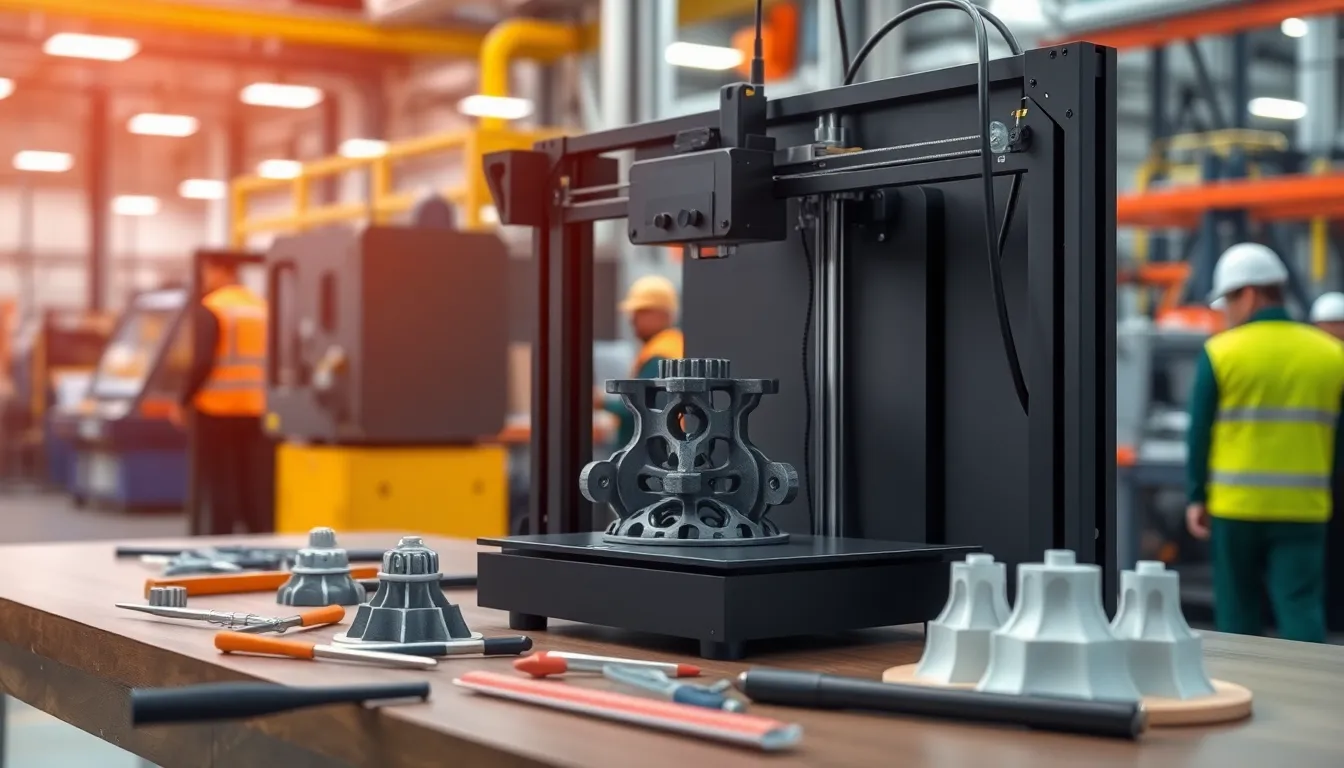
Industries widely adopt 3D printing, capitalizing on its potential to enhance efficiency and innovation across manufacturing and prototyping.
Manufacturing
Manufacturing leverages 3D printing to create complex components quickly. This technology allows for the production of lightweight structures that traditional methods struggle to achieve. Industries such as aerospace utilize 3D printing to fabricate critical parts, significantly reducing both material waste and production time. Custom tools and fixtures also benefit from additive manufacturing, which streamlines operations and improves precision. Furthermore, the flexibility in design enables manufacturers to easily iterate and optimize products. Ultimately, 3D printing transforms conventional manufacturing practices, establishing new benchmarks for efficiency and sustainability.
Prototyping
Prototyping stands as one of the most significant applications of 3D printing. Designers and engineers employ this technology to create rapid prototypes, allowing for immediate testing and feedback. Companies can refine products faster, reducing development costs and timeframes. High accuracy in prints facilitates realistic evaluation of form and fit, enhancing collaboration between teams. Additionally, the ability to simulate various materials aids in better decision-making during the design process. As a result, 3D printing streamlines the prototyping stage, accelerating the journey from concept to market.
Medical Applications
3D printing significantly transforms the medical field. This technology improves accuracy and customization in various healthcare practices.
Bioprinting
Bioprinting allows for the creation of living tissues and organs using bioinks. Researchers leverage this process to develop structures that mimic natural organs, enhancing transplantation potential. Progress in bioprinting shows promise for drug testing and disease modeling. With the ability to produce customizable tissues, patient-specific solutions become a reality. Various studies indicate that bioprinted tissues may reduce the organ transplant waiting list, addressing a critical healthcare challenge.
Prosthetics and Orthotics
Prosthetics and orthotics benefit immensely from 3D printing technology. Custom prosthetic limbs designed for individual needs enhance comfort and functionality. Multiple studies demonstrate that 3D printing reduces production costs and time, making advanced prosthetics more accessible for patients. Patients experience improved fit and mobility with tailored designs. Orthotic devices produced through this process also provide better support and alignment, contributing to overall patient satisfaction.
Educational Applications
Educational institutions increasingly adopt 3D printing technology to promote hands-on learning and nurture creativity among students. It facilitates engaging teaching methods across various subjects, enhancing comprehension. Students can design and develop projects, leading to improved problem-solving skills and understanding of complex concepts. Through 3D printing, educators provide tangible learning experiences, turning theoretical ideas into physical objects. This immersive approach fosters collaboration among students, encouraging teamwork and communication. Facilitators often use 3D-printed models in disciplines like science and engineering, helping visualize challenging topics.
Teaching and Learning
Teaching often takes a dynamic turn with 3D printing applied in classrooms. It allows educators to create interactive learning materials tailored to student needs. For example, anatomy models aid biology students in understanding human body structures deeply. Furthermore, students engage actively in STEM-related projects, experiencing real-world applications of their studies. By incorporating design software, students enhance their technical skills and gain familiarity with modern tools critical for future careers. This hands-on involvement leads to increased motivation and retention of knowledge, making learning more effective.
Research and Development
Research and development benefit significantly from 3D printing in educational settings. It enables institutions to explore innovative projects and encourage experimentation among students. Faculty and students collaborate to develop prototypes, fostering a culture of creativity and inquiry. Furthermore, research initiatives utilizing 3D printing provide insights into complex topics, pushing the boundaries of traditional methodologies. Students engage in multidisciplinary projects that integrate engineering, design, and technology, preparing them for various career paths. Access to advanced printing techniques also enhances the quality of academic presentations and project displays.
Architectural Applications
3D printing significantly enhances architectural processes. It allows for the creation of intricate and precise designs that traditional methods often struggle to achieve.
Scale Models
Architects utilize 3D printing to produce scale models that effectively represent their visions. These models provide tangible visualizations of concepts, facilitating better communication with clients and stakeholders. Immediate adjustments can occur during the design phase, ensuring accurate representation of materials and proportions. Traditional modeling methods can be time-consuming and costly, but 3D printing streamlines this process, reducing lead times. Designers can explore multiple iterations quickly, enhancing creativity and resulting in more refined final projects.
Custom Components
Customization in architecture becomes more accessible through 3D printing. Architects can create unique components tailored to specific design requirements with precision. Intricate details and complex geometries become manageable, enhancing aesthetic appeal. Project needs drive the production of custom fixtures, enhancing both functionality and design cohesion. This technology reduces waste by producing only necessary components, aligning with sustainable practices. Rapid prototyping of these elements allows for immediate feedback and modification, refining designs before implementation.
3D printing stands at the forefront of innovation across multiple industries. Its ability to create customized solutions and streamline production processes is changing the landscape of manufacturing, healthcare, education, and architecture. As technology continues to evolve, the potential applications of 3D printing will only expand, fostering creativity and efficiency.
With its transformative power, 3D printing is not just a trend but a fundamental shift in how products are designed and produced. As organizations embrace this technology, they’ll likely unlock new possibilities that enhance quality and reduce costs. The future of production is bright, and 3D printing will play a pivotal role in shaping it.


