
In a world where everything seems to shrink, large scale 3D printing is here to make things bigger and better. Imagine a printer so powerful it can create entire buildings, sculptures, or even a life-sized dinosaur (okay, maybe not that last one—yet). This technology is revolutionizing industries by turning dreams into tangible reality, one layer at a time.
Overview of Large Scale 3D Printing
Large-scale 3D printing represents a significant advancement in production processes across multiple sectors. This technology enables the fabrication of large items, which include architectural components, furniture, and even automotive parts. Companies utilize various materials, such as concrete, metal, and plastics, tailoring them to meet specific project requirements.
Industry players incorporate large-scale 3D printing for its efficiency. It reduces the time and cost associated with traditional manufacturing methods, which often involve extensive tooling and assembly lines. Print-on-demand capabilities eliminate excess inventory, aligning production with actual market demands.
Recent implementations showcase substantial structures printed in a fraction of the time required by conventional methods. For example, construction companies successfully printed entire homes in just days, drastically altering housing development timelines. Additionally, the technology promotes sustainable practices by minimizing waste, as only the necessary material is used in the printing process.
Collaboration among architects, engineers, and manufacturers drives innovation in large-scale 3D printing. Early adopters of this technology report enhanced design flexibility, allowing for more complex shapes that were once challenging to achieve. As expertise grows, the integration of smart technologies into 3D printing processes advances further, optimizing production efficiencies and material usage.
Adoption of large-scale 3D printing is gaining momentum worldwide. The construction industry leads this trend, but applications extend into sectors such as aerospace, automotive, and art. As research continues and technology evolves, large-scale 3D printing is set to redefine manufacturing and design paradigms, ultimately transforming how objects are conceived and produced.
Applications of Large Scale 3D Printing
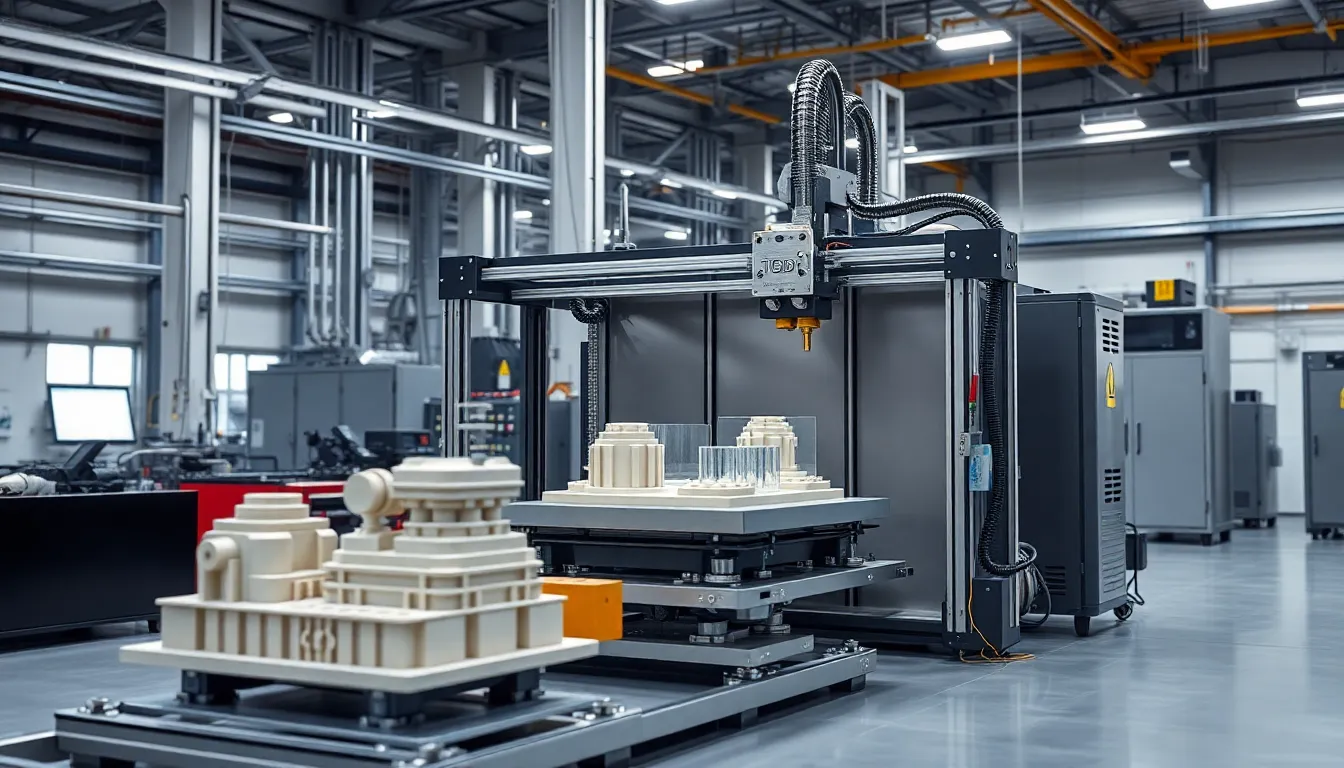
Large-scale 3D printing technology finds diverse applications across various sectors, enhancing efficiency and creativity in production processes.
Industrial Applications
Manufacturing facilities leverage large-scale 3D printing for creating complex components with precision. Aerospace industries produce lightweight parts, achieving significant weight reductions that improve fuel efficiency. Automotive sectors utilize this technology for rapid prototyping, enabling the quick iteration of designs and parts. Energy companies develop custom equipment with reduced lead times, ensuring a more agile response to market demands. Construction firms construct large architectural elements that enhance building efficiency and aesthetics. Medical industries manufacture tailored prosthetics, meeting patient-specific needs with advanced materials.
Commercial Uses
Retail environments increasingly employ large-scale 3D printing to create unique products on demand. Furniture companies produce customized designs, providing consumers with personalized options while minimizing waste. Exhibitions and art installations benefit from this technology, allowing artists to fabricate large sculptures and interactive pieces that captivate audiences. Manufacturers can offer bespoke merchandise, carving out market niches and enhancing brand engagement. Packaging industries utilize large-scale 3D printing for innovative designs, improving product presentation and sustainability. Hospitality sectors create custom decor items, enhancing customer experiences with personalized touches.
Technologies Involved in Large Scale 3D Printing
Large-scale 3D printing utilizes various technologies to efficiently create substantial structures and components. Each method plays a crucial role in the advancement of this innovative manufacturing process.
Fused Deposition Modeling (FDM)
Fused Deposition Modeling excels in its simplicity and effectiveness in large-scale applications. This technique involves extruding melted thermoplastic through a nozzle to build objects layer by layer. Industries favor FDM for its cost-effectiveness and accessibility. It supports a range of materials, including PLA and ABS, providing flexibility for different projects. The technology promotes rapid prototyping, allowing for quick adjustments and iterations. Additionally, large-scale FDM printers can create robust items like furniture, tooling, and automotive components with precision. As a result, FDM is widely adopted across various sectors, including automotive and aerospace, enhancing production efficiency.
Stereolithography (SLA)
Stereolithography stands out for its precision in producing high-quality detailed parts. This process employs a UV light source to cure liquid resin into solid layers. Industries benefit from SLA’s ability to create intricate designs with smooth surface finishes. It’s frequently used for creating prototypes in the medical and dental fields due to its accuracy. The range of compatible resins allows for various material properties, catering to specific needs. Large-scale SLA systems can produce complex geometries, enhancing innovation in design. By integrating this technology, manufacturers can minimize lead times and increase design flexibility, reinforcing its significance in large-scale 3D printing.
Advantages of Large Scale 3D Printing
Large-scale 3D printing offers significant advantages that revolutionize manufacturing processes across various sectors. It stands out for its ability to create complex structures efficiently and sustainably.
Cost Efficiency
Cost efficiency emerges as a key benefit of large-scale 3D printing. This technology significantly reduces material waste, lowering overall production expenses. Traditional manufacturing often involves multiple processes and equipment. In contrast, large-scale 3D printing consolidates fabrication into a single method, eliminating the need for extensive tooling and reducing labor costs. As a result, projects can be completed faster, accelerating time to market. Numerous case studies showcase entire homes printed in just days, demonstrating both time and cost savings.
Design Flexibility
Design flexibility plays a crucial role in large-scale 3D printing applications. It allows for intricate shapes and forms impossible with traditional methods. Customization options enable architects and designers to explore unique concepts and create tailored solutions for specific needs. In the automotive sector, companies can rapidly produce prototypes and test multiple iterations. Artists also benefit from this flexibility, fabricating large sculptures and interactive installations that push creative boundaries. By promoting innovation, large-scale 3D printing enhances design possibilities across industries.
Challenges and Limitations
Large-scale 3D printing encounters several challenges and limitations that affect its widespread implementation. Material selection plays a crucial role in these limitations.
Material Constraints
Material constraints limit the types of substances suitable for large-scale 3D printing. Specific materials, such as concrete, plastics, and metals, dominate the landscape, but each comes with unique properties. Concrete offers strength but poses difficulties in achieving intricate designs. Plastics allow for varied applications but may lack durability in harsh environments. Metals provide structural integrity yet require advanced processing techniques. Research continues to explore new materials that offer improved performance and versatility, although many remain constrained by availability and production cost.
Technical Barriers
Technical barriers hinder the advancement of large-scale 3D printing technologies. Issues with precision and scaling introduce challenges in maintaining quality across large components. Equipment capabilities often dictate design limits, necessitating compromises. Software integration poses additional hurdles, as compatibility between printing systems and design platforms is not always seamless. Training personnel in these sophisticated technologies also adds complexity, with expertise in both design and operation necessary for success. While innovation strives to address these issues, substantial progress is still required for widespread adoption.
Future Trends in Large Scale 3D Printing
Emerging innovations in large scale 3D printing highlight a shift toward sustainability and efficiency. Increased focus on biodegradable materials is driving manufacturers to explore eco-friendly options, reducing overall environmental impact. Enhanced techniques for faster print speeds are allowing large structures to be completed within tighter deadlines, fostering rapid urban development.
Integration of artificial intelligence in design processes facilitates smarter, more adaptive manufacturing. Real-time data analysis improves quality control while reducing waste, helping businesses optimize processes. Expanding capabilities in multi-material printing encourage diverse applications, allowing for the combination of different substances within a single print job.
Collaboration across industries plays a significant role in shaping future developments. Partnerships between architects, engineers, and technology providers generate innovative solutions tailored to specific challenges. This synergy not only enhances design freedom but also accelerates the market readiness of new concepts.
Global investment in 3D printing technologies is projected to surge, attracting attention from various sectors like construction and aerospace. With increased funding, research and development efforts are set to accelerate, pushing the boundaries of what’s possible. Economic factors are influencing companies to adopt 3D printing for on-demand production, further aligning with market trends.
Customization options will become more mainstream, enabling brands to offer tailored solutions that meet diverse consumer preferences. This shift encourages a move away from mass production, focusing instead on niche markets and personalized experiences. Overall, large scale 3D printing is evolving rapidly, positioned to revolutionize multiple sectors, reimagining how products are created and consumed.
Large-scale 3D printing is undeniably shaping the future of multiple industries. Its ability to produce complex structures efficiently and sustainably is redefining traditional manufacturing processes. As technology continues to advance, it’s likely that new materials and methods will emerge, further enhancing design possibilities.
The collaboration among various sectors is fostering innovation and driving the adoption of this transformative technology. With a growing focus on sustainability and customization, large-scale 3D printing is set to meet evolving market demands while minimizing environmental impact.
As it gains traction globally, the potential for large-scale 3D printing to revolutionize production methods and enhance creativity remains immense. The journey ahead promises exciting developments that could change the landscape of manufacturing and design forever.


