
In a world where creativity knows no bounds, 3D printing miniatures has emerged as the secret weapon for hobbyists and creators alike. Imagine transforming your wildest ideas into tangible masterpieces, all while skipping the long lines at the craft store. Whether it’s a tiny dragon ready to wreak havoc on your tabletop or a heroic knight poised for battle, the possibilities are as endless as your imagination.
But wait, there’s more! With 3D printing, you can say goodbye to those flimsy plastic figures that always seem to break at the worst possible moment. Instead, you’ll craft durable, customized miniatures that not only look great but also stand the test of time. So grab your printer and get ready to unleash your inner artist—because who wouldn’t want a miniature version of themselves doing battle with a horde of goblins?
Overview of 3D Printing Miniatures
3D printing miniatures has gained significant popularity among hobbyists and creators. This technology allows for the creation of detailed and customized figures with great precision. Many users appreciate the ability to design miniatures that reflect their unique visions. Specialized software enables easy design customization, making it accessible for both beginners and experienced designers.
Creating miniatures with 3D printing offers numerous advantages. Durability surpasses typical plastic figures, ensuring these miniatures withstand wear and tear. Printing materials such as resin and filament cater to different needs, providing various textures and finishes. While traditional craft stores limit options, 3D printing opens a vast array of designs, tailored to personal preferences.
The process is efficient and cost-effective compared to traditional crafting methods. Time commitment reduces significantly when utilizing a 3D printer for miniature creation. Individuals can also avoid purchasing multiple materials for different designs, opting instead for versatile printing options. Various online marketplaces provide a plethora of ready-to-print files, further simplifying the creation process.
In addition, the community surrounding 3D printing miniatures fosters inspiration and collaboration. Online forums and social media groups enable sharing tips, resources, and design ideas, encouraging creativity among hobbyists. As new technologies and printing materials emerge, the scope of miniature design continues to expand, offering endless possibilities for creators. Embracing these advancements can lead to even more innovative and personalized miniature models.
Benefits of 3D Printing Miniatures
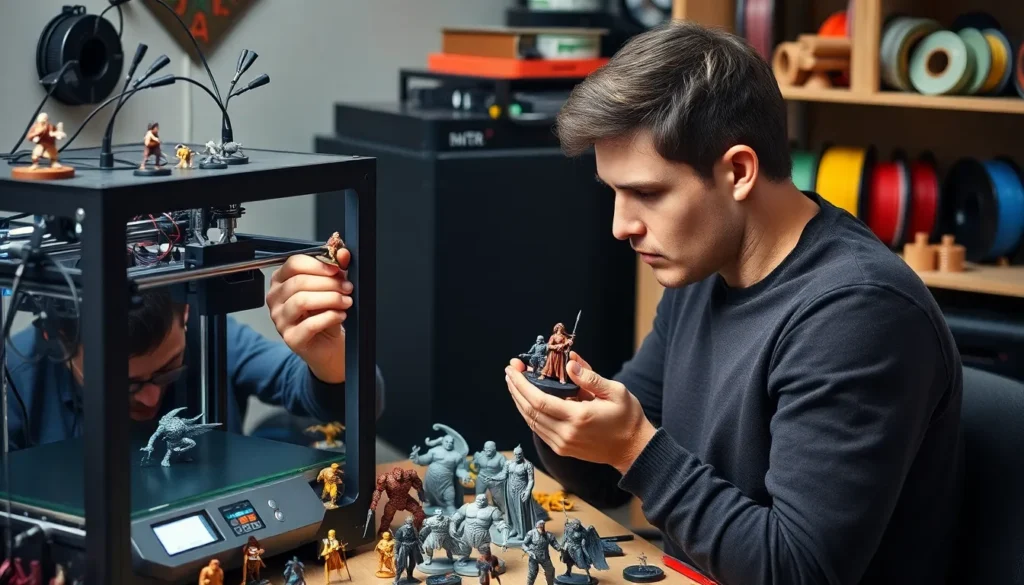
3D printing miniatures offers various advantages for creators and hobbyists. This technology not only enhances the crafting experience but also delivers impressive results.
Cost-Effectiveness
Cost savings remain a significant benefit of 3D printing miniatures. Traditional miniatures often incur high production and material costs; however, 3D printing minimizes these expenses. A comparison shows that creating miniatures with a printer substantially reduces the costs associated with retail purchases. Material selections like PLA filament and resin offer budget-friendly options, catering to different financial plans. The ability to produce multiple miniatures in a single print session maximizes efficiency, making projects more economically viable.
Customization Options
Customization capabilities stand out as a key feature of 3D printing miniatures. Hobbyists can design figures tailored to specific preferences, elevating the creative process. Software allows users to modify dimensions, add details, and personalize features seamlessly. For example, creating miniatures that reflect personal interests or characters engages more deeply with the hobby. Found online, resources provide ready-to-use designs, which further expand customization possibilities. This flexibility supports every creator’s vision, leading to unique and meaningful miniatures.
Popular Materials for 3D Printing Miniatures
Various materials play a significant role in 3D printing miniatures, each offering unique benefits. Understanding these materials helps creators choose the best option for their specific projects.
PLA vs. ABS
PLA, a biodegradable thermoplastic, stands out for its ease of use and smooth finish. Many hobbyists prefer it because it requires lower print temperatures, which results in fewer warping issues. On the other hand, ABS is known for its strength and durability. This plastic holds up better against impacts, making it suitable for miniatures that endure handling. While PLA is ideal for intricate details, ABS provides more versatility for larger and sturdier models. Some creators even blend the two materials to harness the benefits of both.
Resin Printing
Resin printing allows for remarkable detail in miniatures, appealing to those who prioritize precision. This technique utilizes liquid resin, cured layer by layer with UV light. The results often surpass traditional methods, producing highly detailed figures with smooth surfaces. Many opt for resin printing when crafting tabletop game pieces or display models due to its unmatched resolution. However, safety measures are essential since handling resin requires careful attention. Clean-up can be more involved compared to filament printing, but the visual payoff proves worthwhile for many enthusiasts.
Tools and Software for 3D Printing Miniatures
Selecting the right tools and software enhances the 3D printing experience for miniatures. Various options exist to aid hobbyists and creators in their projects.
Design Software
Design software plays a pivotal role in creating unique miniature models. Programs like Blender and Tinkercad offer user-friendly interfaces for beginners. Professionals often prefer ZBrush and Fusion 360 for advanced sculpting and engineering capabilities. These applications allow users to customize miniatures down to intricate details. Many online resources provide tutorials, guiding users in mastering each software tool. Compatibility with multiple file formats ensures seamless transitions to slicing software. Most programs also offer community support, fostering a collaborative environment for sharing tips and designs.
Slicing Software
Slicing software converts 3D models into printable instructions for the printer. Popular options include Cura and PrusaSlicer, both renowned for their reliable performance. Users can adjust settings like layer height, infill density, and support structures to optimize prints. Many slicing programs feature preset profiles tailored to different printers and materials, simplifying the process. Users can also preview the printing path, allowing them to identify potential issues beforehand. Some software includes integrated tools for material management, providing specifications based on filament types. Community forums often share insights on ideal slicing settings, enhancing print quality collectively.
The world of 3D printing miniatures offers an exciting avenue for creativity and innovation. With the ability to create customized figures and the ease of accessing various materials, hobbyists can transform their ideas into tangible pieces. As technology continues to advance, the opportunities for unique designs and improved printing techniques will only grow.
Embracing this craft not only enhances personal projects but also connects creators within a vibrant community. Whether for gaming or display, 3D printed miniatures are set to redefine how enthusiasts express their artistry. It’s time to dive into this fascinating realm and start crafting one-of-a-kind miniatures that reflect individual creativity.


