
Imagine turning your wildest ideas into reality with just a few clicks. That’s the magic of 3D printing, and it’s not just for tech wizards anymore. Whether you’re a hobbyist looking to impress your friends or a budding entrepreneur aiming to launch the next big thing, a 3D printing course can transform your dreams into tangible creations.
Overview of 3D Printing Course
A 3D printing course offers comprehensive insights into the world of additive manufacturing. Participants learn about various printing technologies, materials, and applications, providing a solid foundation in the field. Courses often cover software used for designing models, enhancing technical skills essential for creating prototypes.
Instructors present hands-on experiences alongside theoretical knowledge. Learners engage in practical projects, allowing them to apply what they’ve learned in real-time. This approach fosters creativity, enabling students to develop unique designs and solve complex problems.
Content typically includes lessons on 3D modeling, printing techniques, and maintenance of printers. Specific types of printing processes, such as Fused Deposition Modeling (FDM) and Stereolithography (SLA), receive attention, showing participants how to select the appropriate method for different projects.
Workshops might also incorporate elements of project management, helping aspiring entrepreneurs and hobbyists materialize their ideas efficiently. Networking opportunities often arise through these courses, connecting participants with industry professionals and like-minded peers.
Many courses cater to various skill levels, from beginner to advanced, ensuring inclusivity in learning. Overall, a 3D printing course empowers individuals to harness the capabilities of this technology effectively, promoting innovation and entrepreneurship within a thriving industry.
Benefits of Taking a 3D Printing Course
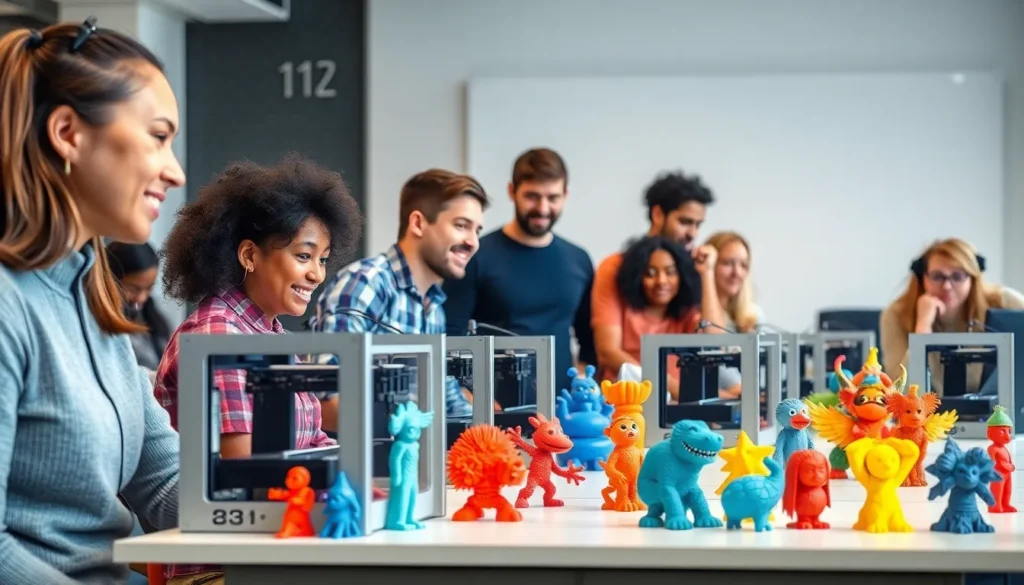
3D printing courses offer numerous advantages, unlocking new skills and enhancing career prospects. Participants gain a comprehensive understanding of additive manufacturing, which is essential in today’s technology-driven world.
Skill Development
Skill development stands out as a primary benefit. Students learn various printing technologies, including Fused Deposition Modeling and Stereolithography. Additionally, they acquire technical skills related to 3D modeling software. Mastering these tools fosters confidence in creating intricate designs. Engaging in hands-on projects enhances problem-solving abilities. Moreover, theoretical knowledge builds a solid foundation for practical applications. The combination of skills equips learners for diverse challenges, allowing creative ideas to thrive.
Career Opportunities
Career opportunities expand significantly with knowledge gained from a 3D printing course. Industries ranging from manufacturing to healthcare increasingly rely on 3D printing technologies. Employers often seek candidates with relevant expertise to drive innovation. Certifications from recognized courses signal proficiency to potential employers. Networking opportunities during classes can lead to valuable connections in the industry. Additionally, entrepreneurship becomes a viable option for those wanting to establish their own ventures. Acquiring this knowledge positions individuals advantageously in competitive job markets.
Course Content and Structure
This section covers the essential elements of a 3D printing course, highlighting key components that shape the learning experience.
Basic Concepts of 3D Printing
Understanding foundational principles is crucial for beginners. 3D printing encompasses various printing methods, including Fused Deposition Modeling and Stereolithography. Learners explore materials used in printing, such as thermoplastics and resins. They gain insights into the design process, learning how to create 3D models using specialized software. Sessions often include discussions on the additive manufacturing process, illustrating how layers build up to form objects. Practical exercises allow participants to operate printers, helping them familiarize themselves with equipment. This hands-on experience enhances comprehension and skill development.
Advanced Techniques and Applications
Diving into advanced topics enriches the learning journey. Students investigate complex printing technologies and their applications in industries like healthcare, aerospace, and engineering. Techniques such as Multi-Jet Modeling and Selective Laser Sintering broaden their perspective on customization and production efficiency. Integration of design software with printing allows for iterative processes, facilitating rapid prototyping. Real-world projects challenge learners to apply advanced skills, emphasizing innovation and creativity. Networking opportunities within these advanced topics connect participants with industry experts, enriching their experience further. Understanding these concepts positions them advantageously in a competitive market.
Choosing the Right 3D Printing Course
Selecting the ideal 3D printing course requires careful consideration of several factors. Identify personal goals first, whether one seeks to enhance a hobby or pursue a career in the field. Evaluate courses that align with those goals, ensuring they offer relevant content and practical experiences.
Review the curriculum to see if it covers essential topics such as modeling, printing techniques, and maintenance. Courses that prioritize hands-on projects allow learners to apply theoretical knowledge in real-time scenarios. Look for programs that incorporate different printing technologies like Fused Deposition Modeling, Stereolithography, and others.
Consider the instructor’s background and expertise. Experienced instructors often provide valuable insights that enrich the learning experience. Networking opportunities can be another crucial factor, as connections made during the course may lead to future collaborations or job opportunities.
Assess the level of support offered by the institution. Responsive support enhances the learning process and helps address questions quickly. Furthermore, explore course reviews and testimonials to gain insight into other participants’ experiences.
Check the availability of certification upon completion. Recognized certifications from reputable institutions enhance employability and signal proficiency to potential employers. The right course will not only equip participants with skills but also expand their professional networks, setting the stage for future success.
A 3D printing course offers invaluable skills and insights that can transform creative ideas into tangible products. By engaging in hands-on projects and learning from experienced instructors, participants can navigate the complexities of additive manufacturing with confidence.
The blend of theoretical knowledge and practical application empowers learners to tackle real-world challenges effectively. As industries increasingly adopt 3D printing technologies, the opportunities for career growth and entrepreneurship expand significantly.
Choosing the right course aligns personal goals with professional aspirations, enhancing employability and fostering innovation. Embracing this technology not only equips individuals with essential skills but also connects them with a vibrant community of like-minded professionals.


